
Antidepressants don't work for everyone. For a specific subset of people, there's a biological reason. Parasites can physically alter brain chemistry. Not metaphorically. Literally.
Key Takeaway
T. gondii, present in over 40 million Americans, can remain hidden in brain tissue for decades while quietly altering dopamine and GABA production. But beyond that, virtually any parasitic infection disrupts neurotransmitter signaling, triggers systemic inflammation that crosses the blood-brain barrier, and causes gut dysbiosis that degrades serotonin production, all of which drive clinical depression through mechanisms that antidepressants don't address.
What is Depression?
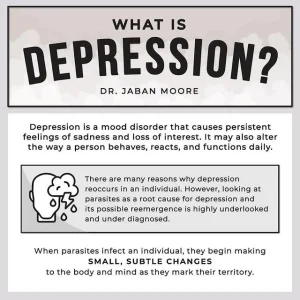
Depression is a mood disorder that causes persistent feelings of sadness, despair, and loss of interest. It may also alter the way a person behaves, reacts, and functions daily. According to a 2012 study, major depressive disorder (MDD) remains among the most common mental disorders, with a 16.6% lifetime prevalence rate in the United States. Pharmacological treatments and therapeutic methods may be used; however, new-generation antidepressants do not produce clinically significant improvements in depression in patients who initially have moderate or even very severe depression.
Can Parasites Cause Depression?
Absolutely, parasites can cause depression. When parasites infect an individual, they begin making small, subtle changes to the body and mind as they mark their territory. Parasites cause depression by disrupting neurotransmitters, altering the gut microbiota, and by causing inflammation.
1) Disrupting Neurotransmitters: Neurotransmitters are chemical messengers that are released and received by the brain's nerve cells. Imbalances in these chemicals may cause depression. The three main neurotransmitters associated with depression are norepinephrine, serotonin, and dopamine.
Parasites may interfere with levels of neurotransmitters within the body. They change the ways nerve cells release neurotransmitters like serotonin and GABA. Essentially, they turn the host's brain chemistry against them. For example, parasites may interfere with GABA, the neurotransmitter that calms the body and mind. A reduction in GABA may cause slow digestion, ADHD, anxiety, muscle pain, headaches, and depression.
Another example includes the intracellular parasitic protozoan, T. gondii. This parasite is often passed through cats and is known to cause toxoplasmosis. The CDC states that this infection is detectable in over 40 million people in the United States.
2) Altering the Gut Microbiota: The gut microbiota is often referred to as the "second brain" because it has such a significant impact on mental health. Parasites cause gut dysbiosis (an imbalance of gut bacteria) that can lead to depression, anxiety, and other mental health disorders. The gut-brain connection is mediated by the vagus nerve, the enteric nervous system, the immune system, and the HPA axis.
3) Causing Inflammation: Parasites cause systemic inflammation. Since the brain is directly linked to the immune system, inflammation can cause depression. Pro-inflammatory cytokines, including interleukins and tumor necrosis factor-alpha (TNF-a), can cause a depressive-like phenotype in both animals and humans.
How to Address Depression Caused by Parasites?
Working with a skilled practitioner who understands the connection between parasitic infections and depression is key to healing. This includes addressing the parasitic infection itself, as well as supporting the gut microbiome, the nervous system, and the immune system.